Primitive Crow & Pear Embroidery: A Study in Folk Art Branding
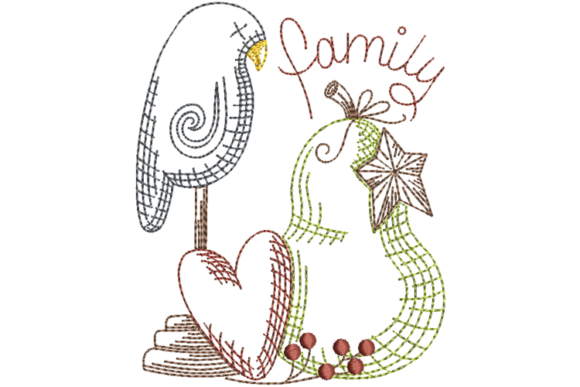
The enduring appeal of the Primitive Crow & Pear Family Embroidery design lies in its masterful fusion of nostalgic folk art with modern branding sensibilities. This particular design, featuring a primitive-style bird, a checked pear, a patched heart, and the word “family” in curly script, is more than a seasonal craft asset; it is a case study in how curated visual elements can evoke specific emotional responses and communicate core brand values. For graphic designers and creative directors, this style offers a rich texture of hand-drawn details and folk art patterns that can be strategically applied to projects requiring authenticity, warmth, and a homespun aesthetic.
The Visual Language of Rustic Charm
From a visual design perspective, the strength of this embroidery pattern is its cohesive color palette and balanced composition. The warm primitive tones—likely encompassing burgundies, creams, and muted earth tones—create an immediate sense of comfort and nostalgia. The visual hierarchy is clear: the bold, curly script of “family” acts as a focal typographic element, while the surrounding motifs (crow, pear, star) provide supporting visual interest without overwhelming the viewer. This demonstrates a key principle in brand identity work: using a consistent set of symbolic icons to tell a story quickly and memorably.
Strategic Applications in Modern Design Projects
While its origins are in textile art, the principles and assets from this design can be adapted across numerous professional contexts. The key is to isolate the core visual elements—the textures, the shapes, the sentiment—and repurpose them with intention.
- Branding & Logo Design: For businesses in the artisanal food, home goods, or countryside hospitality sectors, motifs like the checked pear or primitive bird can be refined into a distinctive logo mark or secondary brand asset, establishing an authentic, craft-forward identity.
- Packaging & Print Design: The patchwork heart and stitched star textures can inform the design of product labels, hang tags, or gift wrap, adding a tactile, premium feel that communicates quality and care.
- Digital & Social Media Content: These folk art elements can be used to create engaging social media graphics, website banners, or email headers for campaigns centered around themes of home, family, thanksgiving, or autumn. They provide a strong visual anchor that stands out in a feed dominated by sleek, modern aesthetics.
- Merchandise & Editorial Layouts: The design is perfectly suited for print-on-demand products like tote bags, mugs, or throw pillows. In editorial design, these elements can frame articles or chapter headings in publications related to lifestyle, gardening, or DIY culture.
Evaluating and Integrating Folk Art Elements
When incorporating a style like the Primitive Crow & Pear design into a professional workflow, several factors ensure a polished result. First, consider scalability. A detailed embroidery pattern may need to be simplified or vectorized for use in a small logo or UI icon. Second, assess compatibility with your existing brand system; the warmth of this palette and the organic lines should complement, not clash with, your core typography and secondary graphics. Finally, prioritize readability. The curly script, while charming, must remain legible at various sizes, especially in digital applications where clarity is paramount for user experience (UX).
Ultimately, thoughtful integration of such a design is about more than decoration; it is a strategic choice in visual communication. By leveraging high-quality, thematically consistent creative assets, designers can build deeper emotional connections with an audience, enhance brand storytelling, and elevate the overall professionalism of their projects. The right design element, used with purpose, transforms a simple layout into a resonant narrative.