Doubt Kills More Dreams: A Design Asset for Motivation
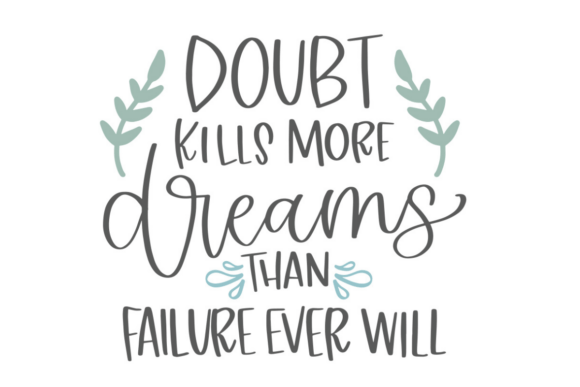
In the realm of visual communication, the phrase "Doubt Kills More Dreams" transcends mere text; it serves as a powerful psychological anchor. As designers, our goal is to create work that not only pleases the eye but also resonates emotionally. This specific design asset combines hand-drawn block lettering with elegant, flowing script in muted slate and teal tones, offering a sophisticated solution for projects centered on perseverance, wellness, and personal growth. It is a prime example of how thoughtful typography and composition can transform a simple message into a compelling visual narrative.
The Role of Typography in Emotional Branding
Typography is the voice of a design. The choice to pair bold block letters with a graceful script in this composition creates a deliberate visual hierarchy. The block lettering demands attention, grounding the viewer with the core message, while the script adds a layer of elegance and approachability. This duality is essential in modern graphic design, particularly when crafting brand identity systems for life coaches, wellness brands, or motivational speakers. The muted color palette of slate and teal ensures the design feels contemporary and professional, avoiding the garishness often associated with motivational clichés.
Practical Applications for Creative Professionals
Integrating this design into your creative projects offers versatility across multiple mediums. For digital marketing and social media graphics, the high-contrast typography ensures readability on mobile screens, making it ideal for Instagram carousels or Pinterest pins. In web design and UI, the botanical framing elements can be used as subtle accents to soften a user interface, contributing to a calming user experience (UX).
When considering physical applications, the vector formats (SVG, DXF, PDF, AI) are invaluable. They allow for infinite scaling without loss of quality, which is critical for packaging design, large-format print design like wall art, or precision cutting for merchandise. Whether you are designing a line of apparel or creating editorial layouts for a self-help publication, the adaptability of these files streamlines the design workflow.
Evaluating and Implementing Design Assets
Selecting a creative asset is not just about aesthetics; it is about compatibility and utility. When incorporating a design like "Doubt Kills More Dreams" into a larger project, consider the following factors:
- Visual Consistency: Ensure the slate and teal color palette complements or intentionally contrasts with your existing brand identity. These muted tones work exceptionally well in minimalist and modern aesthetics.
- Scalability and Format: Verify that the provided formats (SVG, PNG, PDF) meet your production needs. For sublimation or DTG printing, the 300 DPI PNG with a transparent background is essential for sharp, professional results.
- Audience Alignment: The hand-drawn style suggests authenticity and warmth. This is particularly effective for brands targeting audiences interested in personal development, mindfulness, and creative entrepreneurship.
Enhancing User Engagement Through Design
Great design does more than decorate; it communicates. By using high-quality, emotionally resonant assets, you elevate the perceived value of your product or message. For instance, placing this design on a tote bag or a planner cover turns a functional item into a statement piece. In advertising campaigns, the message acts as a hook, drawing in viewers who identify with the sentiment of overcoming doubt. This alignment between visual style and message is the cornerstone of effective branding and successful creative projects.
Ultimately, the power of a design like this lies in its ability to bridge the gap between an idea and a tangible experience. By prioritizing quality assets and thoughtful implementation, you ensure that your visual communication not only captures attention but also inspires action, proving that strategic design is a catalyst for success.